IBA Global Insight - the role of the US in Latin America
In August, the Trump administration announced a new agreement set to give the US access to 65 billion barrels of Venezuela's proven oil reserves. The agreement raises questions about the continued role of the US in Latin America, particularly following the capture of then-Venezuelan President Nicolás Maduro in January. Below, we’ve selected some of the best of Global Insight's continuing coverage of these and related issues.
News analysis: Pentagon's oil investment boosts Venezuelan economy
In late August, the White House announced an agreement with Venezuela for US control of around 20 per cent of the country’s oil reserves. Venezuela’s Interim President, Delcy Rodríguez, says the wealth generated by the deal will be ‘converted into wellbeing’ for her country’s people.

Feature: The new age of aggression
America's capture of Venezuelan President Nicolás Maduro shocked the world. International lawyers and some world leaders swiftly condemned the action, though others applauded Maduro’s removal from power. This article examines the implications of America’s use of military action for its neighbours and the international order.

Feature: Combatting the drug cartels
From mega-prisons to missile strikes on civilian vessels, governments in the Americas are increasingly turning to exceptional uses of state power to combat criminal gangs. The result is often the weakening of the rule of law and the abuse of human rights, and, in some cases, damage to the international order itself.

Feature: Latin America’s crucial electoral cycle
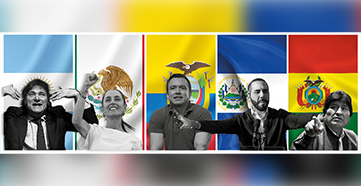
Latin America saw another pivotal year of elections in 2025. The elections took place against the backdrop of President Trump's return to power, as well as the considerable challenges facing countries across the region in the areas of inequality, crime, migration and security, to name just four.
Feature: Bolsonaro conviction signals Brazil’s democratic resilience
It took just ten days for Brazil’s Supreme Federal Court to convict former president Jair Bolsonaro of plotting a military coup to overthrow the government, sentencing him to 27 years and three months in prison. This article assesses the implications of the conviction for the country’s democratic resilience.

News analysis: Milei election win raises questions over US interference
Javier Milei’s victory in last November’s elections marked the first time a ruling party had won a midterm election in Argentina since 2017. The victory followed a $40bn bailout offer from President Trump to stabilise the Argentinian economy provided the electorate voted for Milei, raising questions about US interference.

News analysis: Hope and uncertainty in the wake of US capture of Maduro
Since Maduro assumed power in 2013, Venezuela has battled an ever-deepening economic and humanitarian crisis, forcing millions to flee. The reaction to his removal was therefore mixed, with some praising his departure as heralding the country’s return to democracy while others criticised America’s intervention.

Feature: Women in power
Claudia Sheinbaum's election as Mexico’s first female president in 2024 marked the latest example of how the country has been leading the way on gender parity between elected officials. The UN has said however that, globally, gender equality in the highest positions of power won’t be reached for another 130 years at the current rate.

Feature: The future of Mexico’s nearshoring boom
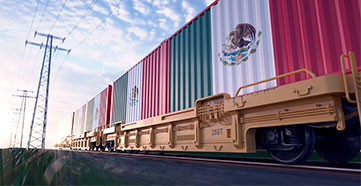
In recent years, thousands of US companies have relocated operations from Asia and Europe to Mexico, part of what’s been called a nearshoring phenomenon. But the country's success story faces threats from Trump administration tariffs and domestic judicial reforms. This article assesses how Mexico is weathering the storm.